
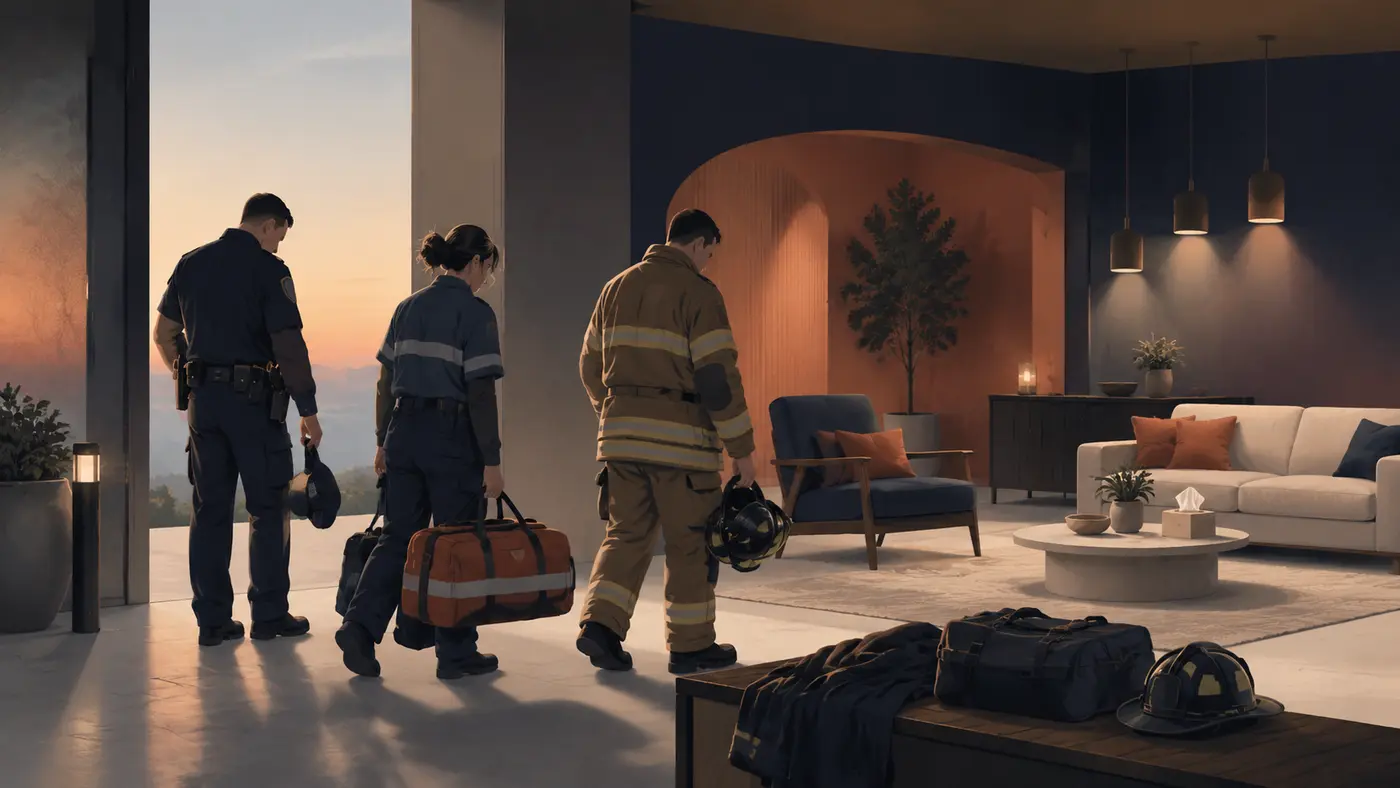
Trauma in first responders is rarely one simple story
Police officers, paramedics, firefighters and other first responders may be exposed to death, serious injury, violence, threat, human suffering and intense responsibility as part of ordinary work. Sometimes one incident becomes the clear turning point. More often the load is cumulative: repeated scenes, difficult decisions, disrupted sleep, organisational pressure and the expectation of returning to duty before there has been time to process what happened.
Not everyone develops PTSD, and distress after a serious incident is not automatically a disorder. People may notice intrusive images, nightmares, irritability, emotional numbing, hypervigilance, guilt, avoidance, drinking, relationship strain or a gradual loss of patience and meaning. Burnout, depression, anxiety, moral injury and physical injury may overlap, which is why assessment should be broader than a checklist of trauma symptoms.
A psychologist can work with both symptoms and operational context
Treatment may begin with sleep, current safety, substance use, acute stress, anger or strategies for staying present when the body shifts into high alert. When PTSD is present, guideline-supported options include trauma-focused cognitive therapies, prolonged exposure, Cognitive Processing Therapy and EMDR. These approaches can help the brain update memories and meanings that still feel current, such as ‘I should have prevented it’, ‘no situation is safe’ or ‘I cannot trust my judgement’.
The occupational context matters. A generic explanation of stress can feel tone-deaf when decisions were made in seconds, information was incomplete and consequences were serious. Therapy needs enough understanding of policing or emergency work to discuss command, use of force, exposure, confidentiality, return to work and the difference between personal responsibility and system responsibility without pretending the psychologist was there.
What the treatment research shows
A 2022 systematic review and meta-analysis found that psychological interventions reduced PTSD, depression and anxiety symptoms in first responders, with larger PTSD reductions in clinician-delivered and CBT-based interventions. The authors also found moderate to high risk of bias across the evidence, so the results should not be turned into certainty about every occupation or treatment format.
A police-specific meta-analysis published in 2025 identified only four eligible studies, involving 804 participants. The average pre-to-post effect for trauma-focused psychotherapy was large, but most of that estimate came from uncontrolled change within participants. The small number of studies, limited diversity and lack of rigorous comparison groups mean the result is encouraging rather than definitive.
Cumulative exposure and moral injury may need different questions
Some officers are not most troubled by fear. They are carrying guilt about a decision, anger about leadership, disgust, betrayal or grief for what could not be prevented. This can resemble burnout while being organised around values and responsibility. Therapy may need to separate guilt from shame, examine what choices were realistically available and consider repair, accountability or renewed connection with professional values.
Cumulative exposure can also make ordinary life feel strangely flat or unsafe. The person may have become skilled at suppressing reactions on shift and then find that the same strategy creates distance at home. Work can include recognising when operational modes are useful, when they have followed the person home and how to shift without treating vigilance or emotional control as personal defects.
Confidentiality should be discussed before the work starts
First responders often worry about who will know, what will be reported and whether attending therapy will affect their role. The answer depends on whether treatment is private, employer-funded, insurer-funded or part of another formal pathway. A psychologist should explain who the client is, what information is required, the limits of confidentiality and how any reports will be handled before detailed clinical work begins.
The right treatment is not necessarily the most intense treatment. It is the one that fits the formulation, has a credible evidence base and is delivered by someone who can respect both the person and the realities of the job. For police and first responders who have spent years being the steady one, therapy can be a private place to stop performing competence and work on what the work has cost.
Research drawn on
- Alshahrani KM, Johnson J, Prudenzi A, O’Connor DB. PLOS ONE. 2022;17:e0272732. Psychological interventions for reducing PTSD and psychological distress in first responders. View source
- Steensma-Young S, Berle D. Journal of Police and Criminal Psychology. 2025;40:708–717. Outcomes of trauma-focused psychological therapies for police officers with PTSD symptoms. View source
- Phoenix Australia. Australian Guidelines for PTSD and Complex PTSD. View source
- Griffin BJ, Price LR, Jenkins Z, et al. Current Treatment Options in Psychiatry. 2025;12:7. A systematic review and meta-analysis of moral injury outcome measures. View source